
Satellite Connectivity in Smartphones in 2026: How Direct-to-Cell Is Changing Mobile Coverage
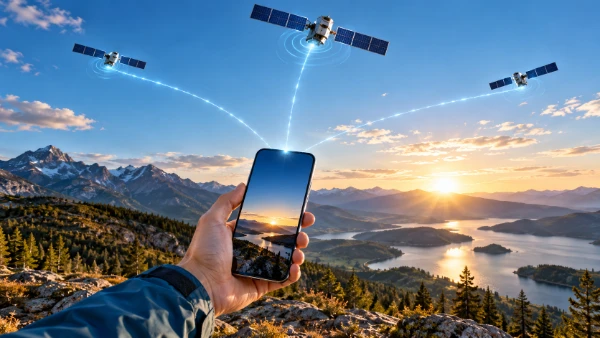
For decades, losing mobile coverage meant losing almost every practical way to communicate unless a separate satellite phone was available. That distinction is becoming less clear in 2026. Direct-to-Cell and other direct-to-device satellite services can connect compatible everyday smartphones to satellites when terrestrial mobile networks are unavailable, extending basic communication into mountains, rural roads, coastlines, islands and other areas beyond conventional towers. The technology is still not a replacement for 4G or 5G, and availability varies considerably between countries, operators and devices, but satellite connectivity has already moved beyond experimental demonstrations. Commercial services now support functions ranging from text messaging and location sharing to selected data-based apps, while smartphone manufacturers continue to offer their own satellite features for emergencies and personal communication.
How Direct-to-Cell Works on an Ordinary Smartphone
The central idea behind Direct-to-Cell is surprisingly simple from the user’s point of view. A satellite acts, in effect, as an extremely distant mobile base station. Instead of a phone connecting to a tower on the ground, it communicates with suitable satellites passing overhead. Some commercial services use mobile spectrum supplied by partner network operators, allowing compatible phones to connect without the large external antennas traditionally associated with satellite communications. Starlink’s Direct to Cell system, for example, was designed to communicate with standard LTE smartphones, while services from mobile operators integrate the satellite connection into their existing networks.
This does not mean that every phone automatically gains satellite coverage. The handset still needs suitable radio hardware, software support and compatibility with the frequencies used by the mobile operator. Network approval is equally important. A phone that works with one country’s satellite-enabled mobile service may not necessarily support another service abroad. During 2026, however, the range of supported devices has widened considerably. Apple’s guidance, for example, states that network-operator satellite features can work with iPhone 13 and later when the mobile operator and plan support them, while operator services elsewhere support selected recent Android devices as well.
The user experience is also becoming less specialised. With operator-based Direct-to-Cell services, switching to a satellite connection can happen automatically when terrestrial coverage disappears and the required conditions are met. Users do not necessarily need a separate satellite handset or a large dish. In practical use, however, the phone usually needs a reasonably unobstructed view of the sky. Buildings, steep terrain, dense vegetation and other obstacles can weaken or prevent the connection. Satellite availability can also change as satellites move overhead, so performance should not be expected to match a permanent terrestrial mobile connection.
Direct-to-Cell Is Different from Traditional Satellite Phone Service
Traditional satellite phones were designed specifically to communicate with satellite networks. They often used dedicated hardware, specialised subscriptions and relatively large antennas, making them useful for expeditions, shipping, emergency response and work in extremely remote locations but less practical for ordinary consumers. Direct-to-Cell changes this model by bringing at least some satellite functionality to smartphones people already carry. Instead of purchasing a separate device for occasional trips outside mobile coverage, a supported subscriber may be able to continue using the same phone number and familiar messaging or app interface.
There is also an important distinction between operator-provided Direct-to-Cell and manufacturer-specific satellite features. Apple, for example, provides satellite functions on supported iPhones through satellite partners including Globalstar. On supported models and in eligible regions, these functions include Emergency SOS, roadside assistance, location sharing and Messages via satellite. Separately, mobile operators can provide their own satellite connectivity through partners such as Starlink. An iPhone may therefore support more than one type of satellite connection depending on the country, operator and circumstances.
This distinction matters because the capabilities are not identical. A manufacturer’s service may be designed around a defined set of features, whereas an operator’s Direct-to-Cell network can behave more like an extension of mobile coverage. In 2026, some operator services already support data for selected applications as well as messaging. That represents a significant change from the early stage of consumer satellite connectivity, when the main focus was sending short emergency messages. The direction is towards closer integration between terrestrial and satellite networks, although the two still offer very different levels of capacity.
What Satellite-Connected Smartphones Can Actually Do in 2026
Text communication remains one of the most mature uses of direct satellite connectivity. It requires much less network capacity than conventional mobile broadband and can be extremely valuable when a user is outside tower coverage. Starlink Direct to Cell messaging began commercial operation in markets including the United States and New Zealand, and services have since expanded. One New Zealand reported in February 2026 that its satellite service had already handled 10 million texts before it introduced additional data capabilities. In the United States, T-Mobile’s T-Satellite service has similarly developed from basic satellite messaging into a broader off-grid service.
Data connectivity is now possible in selected circumstances, but it should not be confused with unrestricted 4G or 5G internet access. T-Mobile expanded T-Satellite to support satellite-ready applications in October 2025, including services such as Google Maps, AccuWeather, AllTrails and WhatsApp. One NZ also introduced access to selected apps and WhatsApp calling in February 2026. Japan’s KDDI had already launched data support for au Starlink Direct in August 2025, initially allowing compatible devices to use selected services such as maps, weather and news outside terrestrial coverage. These examples show how satellite mobile service is progressing from simple emergency communication towards everyday functions that are especially useful when travelling.
Location services are another practical benefit. Being able to send a position when a person is stranded, hiking or travelling through a sparsely populated region can be more valuable than general internet access. Satellite connectivity can also keep users informed through weather information, maps or emergency alerts where supported. The exact feature set depends on the operator and device, and users should check compatibility before relying on a service. In particular, satellite data should be regarded as a limited connection designed to preserve useful communication rather than as a substitute for streaming, large downloads or other bandwidth-heavy activity.
Emergency Communication Is Still One of the Most Important Uses
Satellite connectivity can become especially significant when conventional infrastructure is unavailable because of geography or disruption. A person may be only a short distance from normal mobile coverage yet still be unable to reach a tower because of mountains, forests or the absence of nearby infrastructure. Natural disasters can create a similar problem when electricity failures or damaged network equipment take mobile sites offline. A satellite link provides another route for information to reach or leave the affected area, provided the user’s device, service and surroundings allow a connection.
Services introduced during 2025 and 2026 illustrate how this can work in practice. T-Mobile made satellite Text-to-911 available in eligible parts of the United States for people using compatible phones, including users of other mobile operators who enrol for the service. Apple continues to provide Emergency SOS via satellite on supported iPhones in eligible countries and regions. The phone can help a user contact emergency services even when conventional mobile and Wi-Fi connections are unavailable, while information such as location can be sent as part of the emergency exchange.
Satellite access nevertheless should not encourage users to treat remote travel as risk-free. A clear view of the sky can be necessary, and valleys, caves, buildings, heavy tree cover or other obstructions may prevent communication. Messages may also take longer to send than they would through a normal mobile network. Apple notes that a satellite message can take around 30 seconds in ideal conditions and longer when foliage interferes with the connection. For anyone travelling into remote areas, preparation, offline maps, sufficient battery power and established safety arrangements therefore remain important even when a satellite-capable smartphone is available.
Where Direct-to-Cell Is Heading After 2026
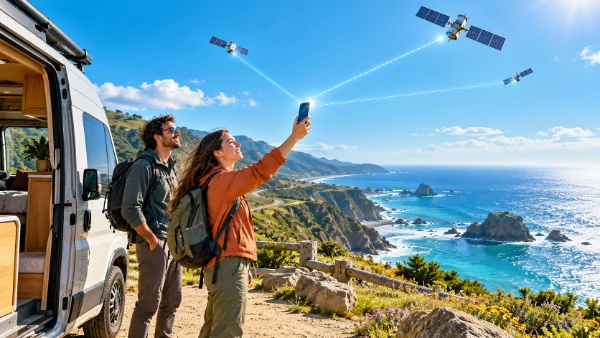
The expansion of Direct-to-Cell is increasingly international. New Zealand became an early commercial market for Starlink-based satellite-to-mobile communication, while KDDI launched au Starlink Direct across Japan and subsequently expanded its capabilities. In 2026 KDDI also began introducing international satellite roaming, initially allowing eligible Japanese customers to connect through partner satellite services in the United States. By August 2026, KDDI announced additional access in Canada, the Philippines and New Zealand. The significance is not simply that another country has satellite coverage, but that a subscriber can increasingly keep satellite functionality while travelling between supported markets.
Europe is progressing too, although availability remains more fragmented and regulation, spectrum arrangements and operator partnerships affect the timing of commercial launches. In June 2026, OQ Technology and Telefónica Germany announced a live European demonstration intended to connect standard, unmodified smartphones directly to low-Earth-orbit satellites using licensed mobile spectrum. The demonstration was designed to evaluate messaging and voice-related services. At the same time, the GSMA and European Space Agency have continued work on non-terrestrial networks and direct-to-device connectivity, including new funding announced in March 2026 to accelerate projects combining satellite and mobile infrastructure.
The direction is therefore towards a hybrid mobile network rather than a world in which satellites replace towers. Ground-based networks remain far better suited to dense cities, high traffic levels and fast data connections. Satellites are particularly valuable for filling geographical gaps and adding resilience where terrestrial infrastructure cannot economically or reliably provide continuous coverage. The GSMA has stressed that direct-to-device satellite systems have real benefits but also fundamental capacity and spectrum limitations. In practical terms, the most realistic future is one in which phones use terrestrial networks whenever they are available and satellite connectivity becomes a secondary layer when those networks disappear.
Why Satellite Coverage Will Complement Rather Than Replace 5G
A mobile tower serves a comparatively small area with substantial local capacity, whereas a satellite beam may need to cover a much larger region and share its available resources among many users. That difference becomes important when thousands of people attempt to transmit large amounts of data simultaneously. Satellite systems can provide communication across enormous areas that would be difficult to cover with ground infrastructure, but they cannot simply reproduce the capacity of a dense urban 5G network from orbit. This is why today’s smartphone satellite services frequently prioritise messaging, navigation, weather, emergency functions and carefully selected applications.
Future generations of satellites and smartphones are expected to reduce some of these restrictions. KDDI announced in September 2026 that it had reached an agreement for next-generation Starlink Mobile V2 services, with the stated aim of bringing higher-speed broadband and native voice calling to areas outside terrestrial coverage by the end of 2027. Such developments indicate where the industry is heading: more useful data, easier calling and a connection that feels increasingly similar to ordinary mobile service. They do not mean that every handset or every country will receive these capabilities at the same time, because spectrum approval, satellite availability, device compatibility and commercial agreements will continue to determine access.
For smartphone users, the biggest change is therefore not that the conventional mobile network is disappearing. It is that losing sight of a mobile tower no longer has to mean complete isolation. By 2026, supported smartphones can already send messages, share locations, receive important information and, on certain services, use selected apps through a satellite connection. Direct-to-Cell remains slower and more limited than normal mobile broadband, but its value lies somewhere else: extending useful communication into places where there was previously no practical smartphone connection at all. As operator partnerships and compatible devices expand, satellite coverage is becoming an additional layer of everyday mobile service rather than a feature reserved only for specialist satellite phones.
Popular topics
-
Satellite Connectivity in S...
For decades, losing mobile coverage meant losing almost every …
-
 Delta Force Mobile in 2026:...
Delta Force Mobile has two core multiplayer experiences that …
-
 How Modern Browsers Use Har...
Modern browsers no longer rely on the CPU for …
-
 RISC-V for a Home PC in 202...
RISC-V has moved beyond research boards and small embedded …
-
 Android 16 Desktop Mode: Ca...
For years, smartphone manufacturers have promoted the idea that …