
T Frostpunk Mobile — Does Strategic Survival Retain Its Depth on a Smaller Screen?
Frostpunk has always stood out as a demanding strategy game where every decision carries weight, and moral dilemmas are as important as resource management. With the mobile adaptation released in recent years and updated towards 2026, the question arises: can such a complex survival experience truly translate to a touchscreen format? This article examines how T Frostpunk Mobile handles mechanics, interface limitations, and player engagement, focusing on whether its core depth remains intact.
Adapting Complex Strategy Mechanics to Mobile Devices
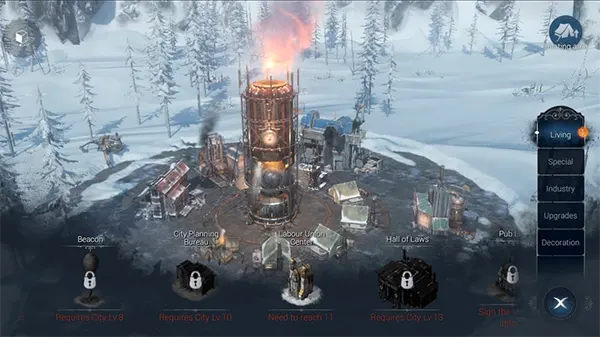
At its core, Frostpunk relies on layered systems: temperature control, workforce allocation, lawmaking, and city expansion. On desktop, these elements benefit from precise input and a broad visual overview. The mobile version attempts to preserve this structure by simplifying navigation while keeping underlying systems unchanged. Players still manage heat zones, assign citizens to jobs, and respond to crises in real time.
However, the adaptation inevitably introduces constraints. Screen size limits how much information can be displayed at once, leading to more frequent switching between menus. While this does not remove depth, it alters the pacing. Decisions feel slightly slower, as players need additional taps to access critical data that would otherwise be visible simultaneously.
Despite these changes, the strategic framework remains largely intact. The developers have avoided over-simplification, which is crucial. Instead of reducing mechanics, they have restructured access to them. This approach ensures that experienced players still face the same level of challenge, even if interaction patterns differ.
User Interface and Control Optimisation
The interface redesign plays a central role in determining whether the mobile version succeeds. Touch controls replace mouse precision, which introduces both opportunities and limitations. Dragging to navigate the city feels intuitive, but selecting small buildings or managing dense areas can occasionally lead to misinputs.
To compensate, the game introduces enlarged interaction zones and contextual menus. These reduce frustration but also slightly abstract the experience. For instance, instead of directly interacting with multiple buildings at once, players often rely on layered menus, which changes how information is processed.
Importantly, the interface prioritises clarity over realism. Visual cues, icons, and colour coding are enhanced to ensure readability on smaller screens. While this improves accessibility, it subtly shifts the tone of the game from a detailed simulation to a more guided experience.
Maintaining Narrative Tension and Player Engagement
Frostpunk is not just about mechanics; its emotional weight defines much of its appeal. The mobile version retains the core narrative structure, including ethical decisions that impact the survival of the population. Laws, child labour policies, and emergency measures still carry consequences that unfold over time.
On mobile, these narrative elements are delivered in shorter, more digestible segments. This aligns with typical mobile play sessions, which are often interrupted or limited in duration. As a result, storytelling becomes more modular, without losing its intensity.
What remains particularly effective is the sense of pressure. Even on a smaller screen, the game maintains urgency through sound design and visual feedback. The drop in temperature, citizen discontent, and resource shortages still create a constant sense of tension, reinforcing the survival theme.
Session Length and Gameplay Flow
Mobile gaming habits differ significantly from desktop play. T Frostpunk Mobile adapts by allowing players to progress in shorter bursts. Autosave systems and session-friendly pacing make it easier to step away without losing progress.
This design choice, however, affects long-term planning. On desktop, players often engage in extended sessions, carefully planning city layouts and resource chains. On mobile, strategies may be more reactive, influenced by shorter play windows.
Even so, the core loop remains consistent. Players still balance risk and stability, respond to unexpected events, and adjust strategies over time. The difference lies not in what players do, but in how frequently they pause and resume their decision-making process.
Technical Performance and Visual Presentation in 2026
By 2026, mobile hardware has significantly improved, allowing more demanding games to run smoothly. T Frostpunk Mobile benefits from this progress, offering stable performance on mid-to-high-end devices. Frame rates remain consistent, and loading times are reduced compared to earlier builds.
Visually, the game preserves its distinctive frozen aesthetic. Snow effects, lighting, and environmental details are adapted to mobile without major compromises. While some textures are simplified, the overall atmosphere remains faithful to the original design.
Battery consumption and device heating are still factors to consider. Extended sessions can drain power quickly, especially on older devices. However, optimisation updates have improved efficiency, making the experience more sustainable for regular play.
Cross-Platform Consistency and Future Updates
One of the key aspects of the mobile version is its alignment with the broader Frostpunk ecosystem. Updates often mirror features introduced in other versions, ensuring consistency in gameplay mechanics and content. This approach helps maintain relevance and keeps the mobile version from feeling like a secondary product.
Cloud saves and synchronisation features also contribute to a more flexible experience. Players can switch between devices without losing progress, which is particularly useful for those who engage with the game across multiple platforms.
Looking ahead, the continued development of mobile hardware suggests further improvements are likely. Enhanced interfaces, better performance, and expanded content could strengthen the mobile version’s position as a полноценное стратегическое решение rather than a simplified adaptation.
Popular topics
-
 Satellite Connectivity in S...
For decades, losing mobile coverage meant losing almost every …
-
 Delta Force Mobile in 2026:...
Delta Force Mobile has two core multiplayer experiences that …
-
 How Modern Browsers Use Har...
Modern browsers no longer rely on the CPU for …
-
 RISC-V for a Home PC in 202...
RISC-V has moved beyond research boards and small embedded …
-
 Android 16 Desktop Mode: Ca...
For years, smartphone manufacturers have promoted the idea that …